Available
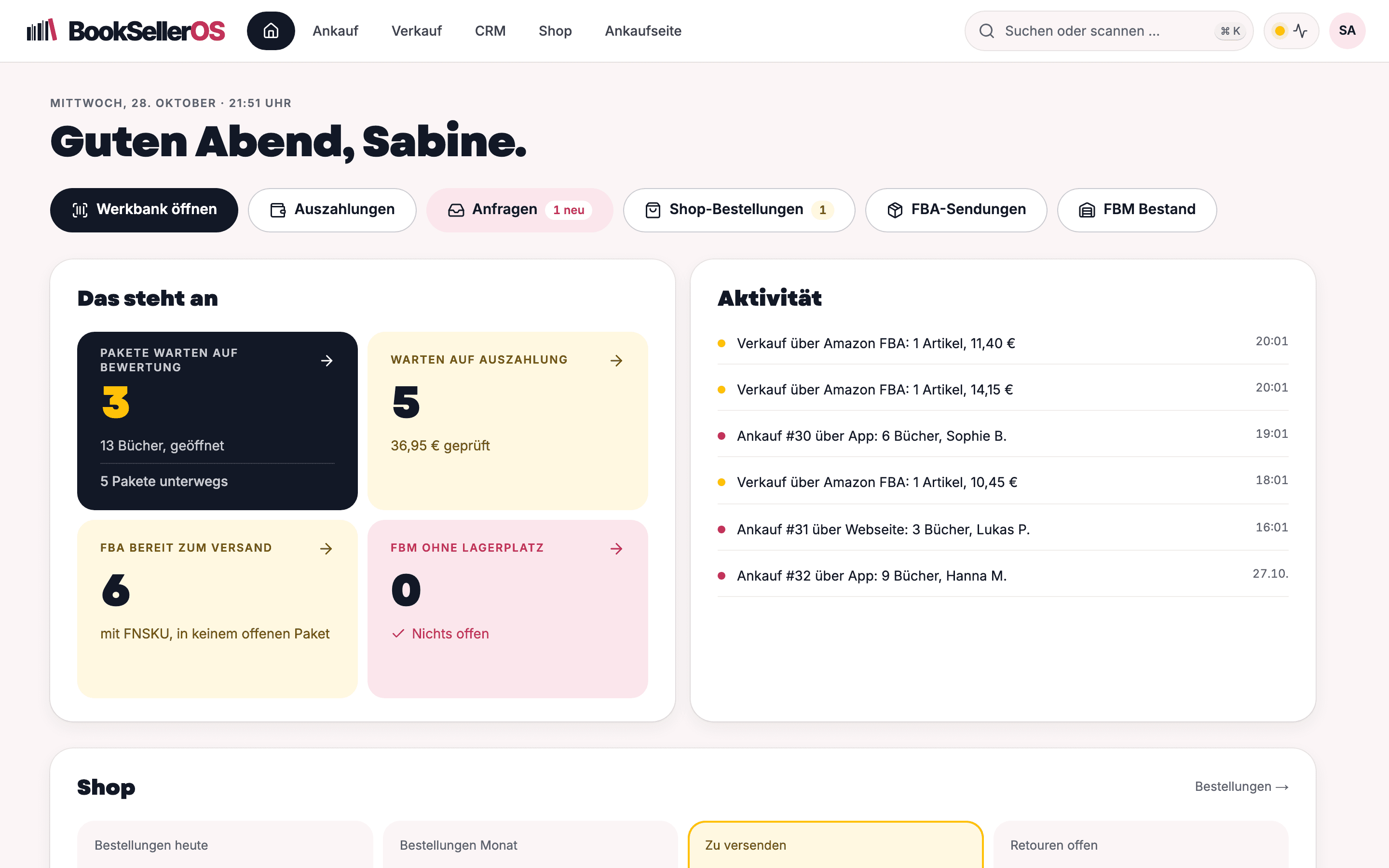
The software for used and new book retail.
- Buyback, goods-in and Amazon FBA in one system
- Under your brand, ready in as little as 21 days
- Add modules as you need them, for example repricing
Duplicate data, stalled processes and disconnected systems cost valuable time every day. We connect your processes, software and data so your operations become simpler, more reliable and ready to scale.
Measured in a live client project in book retail.
Built from real projects in book and media retail, proven in daily operations and ready to run under your brand.
We do more than plan. We develop and connect the components your business genuinely needs.
The building blocks of a reliable, connected system.
It becomes expensive and frustrating when processes, data and systems are considered in isolation. New workarounds appear even though technology should make work easier. What matters is an operating model that is designed as a whole, implemented properly and reliable in day-to-day use.
Your shop, ERP, CRM and spreadsheets hold similar data, but there is no shared and reliable source of truth.
Knowledge lives in people's heads, inboxes and manual handovers. As volume or teams grow, these processes quickly become a bottleneck.
Software is added without clarifying the overall architecture. The result is another isolated solution rather than genuine relief.
Without the right data, processes and ownership, AI can impress in a demo but rarely contribute reliably to day-to-day operations.
We do not begin with a tool. We first clarify what the process must achieve, which data matters and what outcome needs to be produced.
An established bookseller with more than 20 million product records, online buyback, Amazon sales and an ERP that has to keep pace with live operations.
Read the case studyWe assess your processes, systems, data and bottlenecks. You receive a sound basis for decision-making, independent of any further engagement.
We define the architecture, dependencies and the most sensible first step. Every stage must deliver value on its own.
We build, integrate and validate within your ongoing operations. You then decide whether and how the system should evolve.

The System Check shows where buying, pricing and inventory lose time and margin today, and which step actually pays off first.

ai7 combines foresight, analytical clarity and lateral thinking with practical experience in entrepreneurship, self-employment, interim management and software development. Our guiding principle is simple: there has to be an easier way. We reveal connections, challenge established processes and create solutions that do more than manage complexity - they reduce it tangibly.
No. We first assess what remains viable, what can be connected and where replacement would make better economic sense.
No. Growing companies in particular benefit from clarifying ownership, data flows and technical decisions before complexity increases.
Yes. A clearly defined starting point is often the most effective approach, such as one process or a department like finance. We still consider adjacent systems and data flows so the solution can grow without creating another silo.
With the System Check. 17 questions on buying or selling, pricing, inventory systems and channels, after which you can see how robust your system is and which step pays off first.